 Tax
Why some tax reliefs stop counting once you reach S$80,000
Earned Income Relief, Parent Relief, CPF top-ups, SRS: the reliefs add up, but IRAS caps the total at S$80,000 a year. Which reliefs exist for YA 2026, which have lapsed, and who actually comes near the cap.
In brief
- Since YA 2018, the total of all personal reliefs a resident can claim in a Year of Assessment is capped at S$80,000.
- For YA 2026, Course Fees Relief has lapsed, and Foreign Domestic Worker Levy Relief lapsed from YA 2025.
- Most taxpayers never come near the cap. Those who do are usually high earners with several large reliefs, such as Working Mother’s Child Relief.
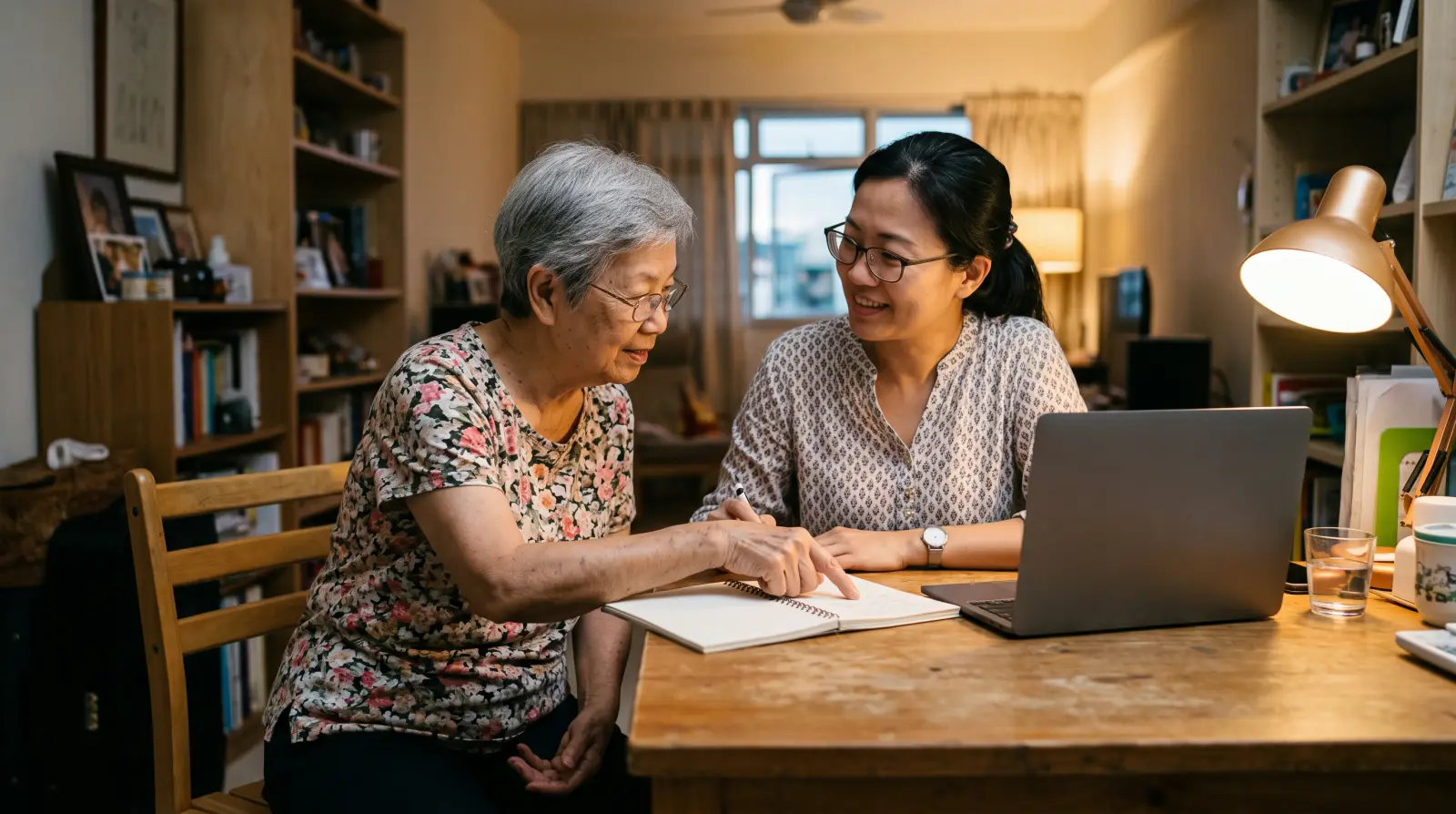
Every tax season, for most people in Singapore, the reliefs section is a quiet line or two: Earned Income Relief, CPF Relief, perhaps Parent Relief for an elderly mother at home. For a smaller group, the reliefs add up to a large figure, and that is where a rule many people have never heard of starts to matter. IRAS caps the total.
The cap is S$80,000 per Year of Assessment, and it has applied since YA 2018. This guide explains how it works, which reliefs count towards it, what changed for YA 2026 and how to tell whether it affects you.
What a relief does, and what the cap limits
A personal relief reduces your chargeable income, the figure that the resident tax rates are applied to. Reliefs are available only to Singapore tax residents who meet each relief’s qualifying conditions. The relief cap does not limit any single relief; it limits the total of all personal reliefs you claim in one Year of Assessment. If the total exceeds S$80,000, IRAS allows S$80,000 and disregards the rest. The cap was introduced in Budget 2016, which IRAS explains was to keep the personal income tax system progressive, and it affects only a small minority of taxpayers.
The main reliefs for YA 2026
For YA 2026, conditions are generally tested on what happened in 2025. The figures below are from IRAS’s relief pages.
| Relief | Amount | Key condition |
|---|---|---|
| Earned Income Relief | S$1,000 below 55; S$6,000 at 55 to 59; S$8,000 at 60 and above | Age at 31 Dec 2025; capped at actual earned income |
| Spouse Relief | S$2,000 | Spouse’s annual income in 2025 not above S$8,000 |
| Parent Relief | S$9,000 living together; S$5,500 not living together (per dependant, up to 2) | Dependant aged 55+, income not above S$8,000; S$2,000 support if living apart |
| Grandparent Caregiver Relief | S$3,000 | Working mothers; caregiver looks after a child aged 12 or below |
| CPF Cash Top-up Relief | Up to S$8,000 self + S$8,000 family | Cash top-ups under the Retirement Sum Topping-Up Scheme |
| SRS Relief | Contributions up to S$15,300 (citizens and PRs) | Contributions made by 31 Dec 2025 |
| Life Insurance Relief | Up to S$5,000 less CPF contributions | Only if total CPF contributions were below S$5,000 |
Source: IRAS relief pages for YA 2026. Each relief has further conditions not shown here; the table is a summary, not a test of eligibility.
Two reliefs have gone. IRAS lists Course Fees Relief as lapsed from YA 2026, with YA 2025 the final year it could be claimed, and Foreign Domestic Worker Levy Relief as lapsed from YA 2025. Anyone copying last year’s claims should check those lines are no longer there.
The S$8,000 income line
Several reliefs for supporting family members share one threshold. From YA 2025, IRAS raised the annual income limit for the dependant from S$4,000 to S$8,000 for Spouse Relief, Parent Relief and the family part of CPF Cash Top-up Relief, and the caregiver’s income limit for Grandparent Caregiver Relief. “Annual income” here is wider than salary. For Parent and Spouse Relief, IRAS counts taxable income such as rent and SRS withdrawals, tax-exempt income such as bank interest, dividends and pensions (but not CPF payouts) and foreign-sourced income.
A retired parent with modest interest and a small private pension could therefore cross the line without having a job at all.
A worked example: who actually reaches the cap
IRAS’s own illustration for YA 2026 shows how the cap bites. Mrs Chua earned S$150,000 in 2025 and has three children. Her claims add up as follows.
| Item | Amount |
|---|---|
| Employment income | S$150,000 |
| Earned Income Relief | S$1,000 |
| CPF Relief | S$20,400 |
| NSman (Wife) Relief | S$750 |
| Working Mother’s Child Relief, three children | S$64,500 |
| Total reliefs claimed | S$86,650 |
| Reliefs allowed (capped) | S$80,000 |
| Chargeable income | S$70,000 |
| Tax payable | S$2,650 |
Source: IRAS, Personal Income Tax Relief Cap. S$6,650 of reliefs is disregarded. Tax: S$550 on the first S$40,000 plus 7% on the next S$30,000.
The example shows the pattern. The cap tends to affect people with high earned income and several percentage-based or large reliefs at once, typically parents claiming Working Mother’s Child Relief alongside CPF Relief. A middle-income worker claiming Earned Income Relief, CPF Relief and one Parent Relief is nowhere near S$80,000.
What the excess means in practice
Reliefs above the cap are simply lost; IRAS says the balance is disregarded and cannot be transferred to anyone else. That has two practical consequences.
First, money spent mainly for the tax relief may bring no relief at all. IRAS notes there is no refund of SRS contributions or accepted CPF cash top-ups, and advises people to consider whether they would actually benefit before contributing. Our guide to topping up a parent’s CPF looks at that decision.
Second, families can arrange shared reliefs sensibly. IRAS suggests that someone who knows they will exceed the cap may consider giving up reliefs such as Qualifying Child Relief, Parent Relief or Grandparent Caregiver Relief so that a spouse or sibling can claim them instead. If a sibling has already filed, an amendment can be made online after the Notice of Assessment.
Good to know
Parent Relief can be shared among siblings who support the same parent, but only one type of relief can be claimed on a dependant: if your father claims Spouse Relief on your mother, the children cannot also claim Parent Relief on her. Working mothers are the exception for Grandparent Caregiver Relief.
Who this matters for, and what to check
- High earners with children: add up Working Mother’s Child Relief, CPF Relief and the rest before planning any voluntary contribution.
- Adult children supporting parents: check the parent’s total annual income, including interest and pensions, against S$8,000.
- Anyone aged 55 or over: Earned Income Relief rises to S$6,000, and to S$8,000 from 60, if you still have earned income.
- Anyone who used Course Fees Relief before: it is not available for YA 2026.
- Families sharing reliefs: agree who claims what, to avoid one person’s reliefs being wasted above the cap.
The takeaway
Reliefs lower chargeable income one by one, but IRAS caps their total at S$80,000 a year. For most households the cap is irrelevant; for a high-earning parent with several children it can quietly erase thousands of dollars of relief. The way rates then apply to what remains is explained in why moving into a higher tax band costs less than many people think.
Official sources
- IRAS, Tax reliefs (including the Personal Income Tax Relief Cap): S$80,000 cap since YA 2018, lapsed reliefs, Mrs Chua example
- IRAS, Earned Income Relief: amounts by age
- IRAS, Parent Relief / Parent Relief (Disability): conditions, S$8,000 income threshold, sharing
- IRAS, Supplementary Retirement Scheme (SRS) Relief: contribution caps and the relief cap
General information
This article is sponsored information from Delta Management OÜ, the publisher of Gobasco (company details). Gobasco is a private, independent website. It is not a government website and is not affiliated with the Singapore Government, any ministry, the CPF Board, IRAS or HDB. It is general information, not personal tax, legal or financial advice, and it does not recommend any product or provider.
Figures are the official published amounts for the period stated or clearly labelled illustrations; what any one person receives or pays depends on their own circumstances and on the official assessment. This site processes no applications and charges no fees. Never give your NRIC number, Singpass details, bank login or one-time passwords to a website in response to an article. For your own position, use the official services of the agency concerned, on websites ending in .gov.sg.
 The Wednesday Brief
Don’t miss a change
One email each Wednesday with what has changed in Singapore’s support schemes, tax, savings and household costs, and the official source for each figure. Nothing to buy.
We first send a confirmation email. Free, and you can unsubscribe at any time.
Gobasco Editorial
Our editorial desk explains Singapore’s household-money rules from the published sources of the agencies concerned. We do not name individual writers, we do not sell financial products and we take no applications. Corrections: editorial@gobasco.com.


 Home & health