 Tax
Topping up a parent’s CPF can lower your own tax, within limits
Cash top-ups under the Retirement Sum Topping-Up Scheme can earn up to S$16,000 of relief a year, S$8,000 for yourself and S$8,000 for family. The conditions on who counts as family, the income test, and the top-ups that earn no relief at all.
In brief
- Cash top-ups under the Retirement Sum Topping-Up Scheme can earn tax relief of up to S$8,000 for topping up yourself and up to S$8,000 for topping up family members, each calendar year.
- For a spouse or sibling without a disability, the recipient’s annual income in the previous year must not exceed S$8,000. Parents and grandparents have no income test.
- Top-ups that attract a Matched Retirement Savings Scheme grant earn no relief, and from YA 2027 the same applies to MediSave top-ups matched under the Matched MediSave Scheme.
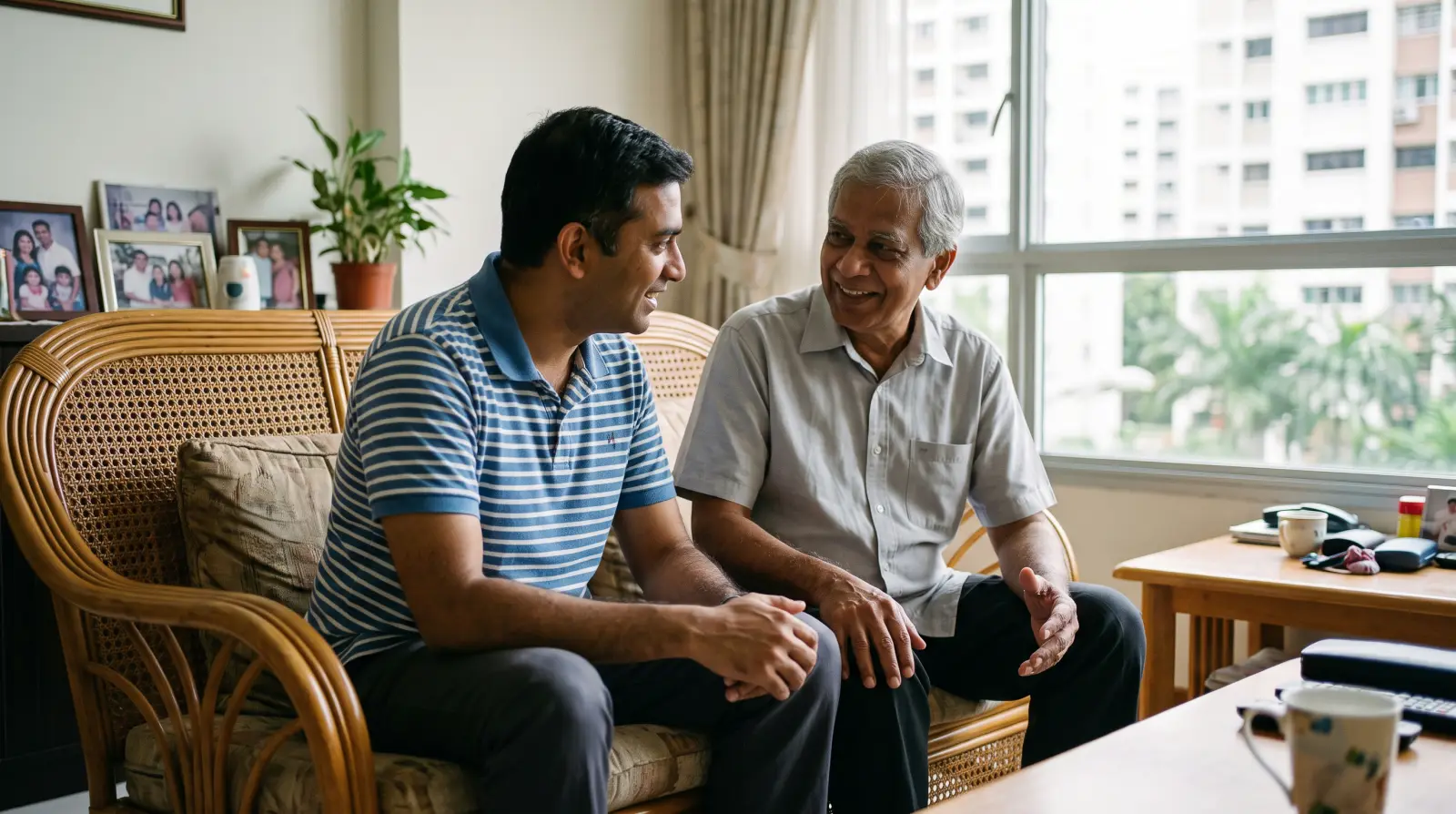
Over dinner, the conversation turns to Appa’s CPF. He retired a few years ago, his monthly payouts are modest, and his son has been wondering whether to put something into his father’s account. Someone at the table mentions that it can also lower the son’s income tax. That is true, within clear limits, and the limits are worth knowing before a single dollar moves, because a CPF top-up cannot be taken back.
This guide is about the tax side of family top-ups: who can be topped up with relief, how much relief is available, which top-ups earn none, and how the relief interacts with the overall S$80,000 cap on personal reliefs.
The scheme behind the relief
The relief is called CPF Cash Top-up Relief. It applies to cash top-ups made under the CPF Retirement Sum Topping-Up Scheme (RSTU), to the recipient’s Special Account if they are below 55 or Retirement Account if they are 55 or older, and, since 2022, to MediSave Accounts. Singapore citizens and permanent residents can claim it. The relief goes to the person who gives; CPF Board states plainly that it applies only to givers and not to recipients.
Two features matter from the start. Only cash counts: transferring money from your own CPF Ordinary Account to a parent earns no relief. And CPF Board stresses that top-ups are irreversible: they are reserved for monthly payouts and cannot be withdrawn for other purposes.
How much relief: S$8,000 plus S$8,000
According to IRAS, the maximum CPF Cash Top-up Relief is S$16,000 per Year of Assessment: up to S$8,000 for top-ups to yourself and up to S$8,000 for top-ups to family members. Relief equals the amount topped up, up to those limits. Top-ups made in calendar year 2025 count for YA 2026; top-ups made in 2026 count for YA 2027.
| Top-up | Amount | Relief |
|---|---|---|
| Own Special Account | S$5,000 | S$5,000 |
| Mother’s Retirement Account | S$10,000 | S$8,000 |
| CPF Cash Top-up Relief | S$15,000 | S$13,000 |
Source: IRAS, CPF Cash Top-up Relief, Example 2. The S$2,000 above the family limit still goes into his mother’s account but earns no relief.
Who counts as family
IRAS lists the family members whose accounts can be topped up with relief: parents, parents-in-law, grandparents and grandparents-in-law (including step and adoptive relationships), a spouse, and siblings. CPF Board adds that top-ups to anyone else, such as friends or other relatives, are allowed but do not qualify for relief.
There is an income test for some of them. For a spouse or sibling without a disability, the recipient’s annual income in the year before the top-up must not exceed S$8,000. IRAS’s example: Mr Lee topped up his wife’s account by S$7,000 in 2025, but she earned S$9,000 in 2024, so his relief for YA 2026 is nil. Parents and grandparents, and a spouse or sibling with a disability, have no income condition.
Top-ups that earn no relief at all
Two government matching schemes now exclude the matched money from relief:
- Matched Retirement Savings Scheme (MRSS). Cash top-ups that attract an MRSS matching grant do not qualify for relief from YA 2026, that is for top-ups received from 1 January 2025. CPF Board describes the MRSS grant as up to S$2,000 a year for eligible members, with a lifetime limit of S$20,000.
- Matched MediSave Scheme (MMSS). Cash top-ups to MediSave that attract an MMSS grant will not qualify from YA 2027, for top-ups made from 1 January 2026.
For a family with an older parent who qualifies for a matching grant, that is a genuine trade-off: the parent’s account gains the government match, but the child giving the money gets no tax relief on the matched portion.
The ceilings on how much can go in
Relief is also limited by how much the recipient’s account can take. For RSTU top-ups, IRAS caps the qualifying amount at the current year’s Full Retirement Sum; for MediSave, at the Basic Healthcare Sum, less the existing balance.
| Year of Assessment | Top-ups made in | Full Retirement Sum | Basic Healthcare Sum |
|---|---|---|---|
| YA 2026 | 2025 | S$213,000 | S$75,500 |
| YA 2027 | 2026 | S$220,400 | S$79,000 |
Source: IRAS, CPF Cash Top-up Relief. A member’s Basic Healthcare Sum is fixed once they reach 65. Your exact limits appear on CPF’s Retirement Dashboard.
Good to know
CPF Board notes that members aged 55 and above may top up their Retirement Account up to the Enhanced Retirement Sum, S$440,800 in 2026, for higher payouts. For tax purposes, though, IRAS computes relief only up to the Full Retirement Sum.
How it fits with the S$80,000 relief cap
CPF Cash Top-up Relief counts towards the overall S$80,000 cap on personal reliefs per Year of Assessment. IRAS warns that accepted top-up money is not refunded, and advises people to check whether they would actually benefit from the relief before topping up. A high earner already near the cap gains nothing in tax from a top-up; our guide to the S$80,000 relief cap shows how quickly large reliefs add up. The value of the relief also depends on your marginal rate, explained in how Singapore’s tax bands work.
Who this matters for, and what to check
- Adult children supporting retired parents: parents and grandparents have no income test, but check whether the top-up would attract an MRSS grant instead of relief.
- Couples where one spouse earns little: the spouse’s income in the previous year must be S$8,000 or less.
- Anyone aiming at a December deadline: CPF and IRAS count by calendar year; your bank and CPF processing times matter.
- High earners: add up your other reliefs first; relief above S$80,000 in total is lost.
- Everyone: a top-up is permanent. Decide on the retirement benefit to the recipient first, and treat the tax relief as secondary.
The takeaway
A cash top-up to a parent’s or your own CPF account can reduce your income tax by the relief times your marginal rate, with up to S$8,000 of relief for yourself and S$8,000 for family each year. The conditions are specific, matched top-ups now earn no relief, and the money cannot be withdrawn later, so the decision is best made on the retirement value to the recipient, with the tax relief as a bonus. Check your limits on CPF’s Retirement Dashboard before you pay.
Official sources
- IRAS, CPF Cash Top-up Relief: relief limits, family members, S$8,000 income test, MRSS and MMSS exclusions, FRS and BHS for YA 2026 and YA 2027
- CPF Board, Top up to enjoy higher retirement payouts: irreversibility, relief for givers only, MRSS grant, Enhanced Retirement Sum 2026
- IRAS, Tax reliefs and the S$80,000 relief cap: overall cap on personal reliefs
General information
This article is sponsored information from Delta Management OÜ, the publisher of Gobasco (company details). Gobasco is a private, independent website. It is not a government website and is not affiliated with the Singapore Government, any ministry, the CPF Board, IRAS or HDB. It is general information, not personal tax, legal or financial advice, and it does not recommend any product or provider.
Figures are the official published amounts for the period stated or clearly labelled illustrations; what any one person receives or pays depends on their own circumstances and on the official assessment. This site processes no applications and charges no fees. Never give your NRIC number, Singpass details, bank login or one-time passwords to a website in response to an article. For your own position, use the official services of the agency concerned, on websites ending in .gov.sg.
 The Wednesday Brief
Don’t miss a change
One email each Wednesday with what has changed in Singapore’s support schemes, tax, savings and household costs, and the official source for each figure. Nothing to buy.
We first send a confirmation email. Free, and you can unsubscribe at any time.
Gobasco Editorial
Our editorial desk explains Singapore’s household-money rules from the published sources of the agencies concerned. We do not name individual writers, we do not sell financial products and we take no applications. Corrections: editorial@gobasco.com.


 Support schemes