 Savings & banking
The savings account that behaves like an RRSP going in and a TFSA coming out
The First Home Savings Account gives a deduction on the way in and a tax-free withdrawal on the way out, within $8,000 a year and $40,000 for life. Who qualifies, how room carries forward, and what happens if the home never comes.
In brief
- Room of $8,000 a year and $40,000 over a lifetime, with unused room carrying forward up to $8,000.
- Contributions are deductible like an RRSP; a qualifying withdrawal for a first home is tax-free like a TFSA.
- The account must close by the end of its 15th year, the year you turn 71, or the year after your first qualifying withdrawal.
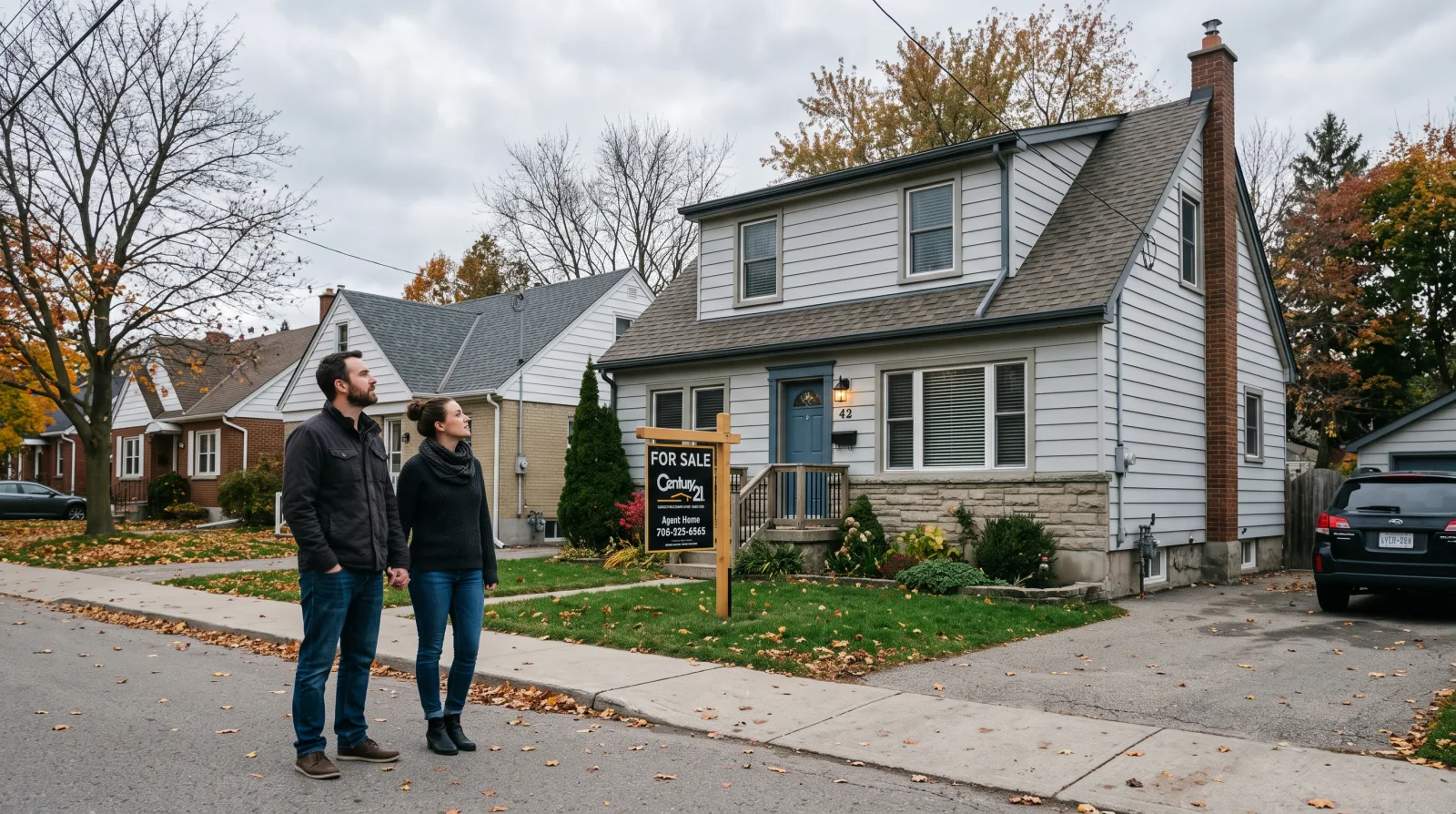
Most registered accounts in Canada make you pick a side. An RRSP gives you a deduction today and taxes the money when it comes out. A TFSA does the reverse: no deduction, but no tax later. The First Home Savings Account, introduced in 2023, is the one account that takes the better half of each deal, provided the money ends up in a first home.
Who the CRA counts as a first-time buyer
The label is narrower than it sounds, and it is checked twice: once when you open the account, and again when you take the money out. To open an FHSA you must be a resident of Canada, at least 18 (19 where that is the age of majority), and no older than 71 at the end of the year. You must also not have lived in a home that you owned or jointly owned as your principal residence in the current calendar year or in the previous four calendar years. The same four-year test applies to your spouse or common-law partner's home if you lived there.
That means a person who sold a condo in 2021 and has rented since would be eligible again in 2026. Someone who lived in a home their partner owns last year would not. The CRA's conditions for opening an FHSA set this out line by line.
Room: $8,000 a year, $40,000 in total
Your participation room is $8,000 in the year you open your first FHSA, and new room of up to $8,000 arrives each 1 January after that, until contributions and transfers from an RRSP together reach the $40,000 lifetime limit. Unused room does not vanish, but the carry-forward is capped: the most you can bring into a year is $8,000 of unused room, so the ceiling in any one year is $16,000. Room only starts accumulating once the account exists, which is the practical argument for opening one early even with a small deposit.
Go over the limit and the excess is taxed at 1 per cent a month until it is withdrawn, transferred or absorbed by the next year's room, the same rate the CRA applies to excess TFSA contributions.
The RRSP half: a deduction you can hold back
Contributions reduce your taxable income, and you choose the year. You can deduct a contribution in the year you make it or in any later year, even after the account has closed, which lets a household time the deduction for a year when income (and the marginal rate) is higher. Two details differ from the RRSP rules. Contributions made in the first 60 days of a year count towards that year only; there is no "first 60 days" window for the previous return. And money moved in from an RRSP uses up FHSA room but is not deductible again, since it was deducted once already.
The TFSA half: a tax-free qualifying withdrawal
Growth inside the account is not taxed, and neither is a qualifying withdrawal. To qualify, at the time of the withdrawal you must: still meet the first-time buyer test (the 30 days before the withdrawal are ignored); have a written agreement to buy or build a qualifying home in Canada with completion before 1 October of the following year; not have acquired the home more than 30 days earlier; be a resident of Canada; and intend to occupy the home as your principal residence within a year. You file Form RC725 with the issuer. There is no dollar cap on a qualifying withdrawal, so a $40,000 account that has grown to $52,000 can come out in full. Any other withdrawal is simply added to your income for the year.
| Account | Going in | Coming out for a first home | Limit |
|---|---|---|---|
| FHSA | Deductible | Tax-free, nothing to repay | $8,000 a year, $40,000 lifetime |
| RRSP (Home Buyers' Plan) | Deductible | Tax-free loan to yourself, repaid over 15 years | $60,000 withdrawal |
| TFSA | Not deductible | Tax-free, room restored next 1 January | Annual limit plus unused room |
Limits as published by the CRA in November 2026. The HBP repayment start is deferred to the fifth year after a 2026 withdrawal. A household can use all three for the same home if the conditions of each are met at the time of each withdrawal.
Combining it with the Home Buyers' Plan
The FHSA did not replace the Home Buyers' Plan; the two stack. The HBP lets you withdraw up to $60,000 from an RRSP for a first home and repay it over 15 years, and the CRA confirms you can make an HBP withdrawal and a qualifying FHSA withdrawal for the same home. For a couple, that is two FHSAs and two RRSPs. A worked illustration: two partners each open an FHSA in 2023 and contribute $8,000 a year, reaching $32,000 each by 2026. With modest growth each account holds about $34,000, so $68,000 comes out tax-free with no repayment. If each also has $30,000 of RRSP savings, the HBP adds $60,000 that must be repaid starting in 2031. Whether to draw on the RRSP at all is a separate decision; our piece on the RRSP rules covers the trade-offs.
The FHSA is the only account where the deduction going in and the tax-free withdrawal coming out both belong to you.
The clock: 15 years, age 71, or the year after you buy
An FHSA is not meant to be permanent. Your participation period ends on 31 December of whichever comes first: the 15th anniversary of opening your first FHSA, the year you turn 71, or the year after your first qualifying withdrawal. Anything still in the account after that loses its FHSA status and its value is added to your income. Before the deadline you have two clean exits. You can transfer the balance directly to an RRSP or RRIF on a tax-deferred basis, which does not use up RRSP room, so a renter who never buys loses nothing but keeps the deduction. Or you can withdraw it as taxable income.
Good to know
Cash and GICs held in an FHSA at a CDIC member are insured as their own category, separate from your TFSA and RRSP. See how the $100,000 limit works. Quebec residents follow the same federal rules; the provincial treatment is set out separately by Revenu Québec.
Who this matters for, and what to check
- Anyone 18 to 71 who has not lived in a home they or their partner owned since 2021: you are likely eligible to open an account now, even with a small deposit, so that room starts to build.
- Check your Notice of Assessment or CRA My Account for FHSA participation room before contributing, especially if you also transferred money from an RRSP.
- Before a withdrawal, confirm the written purchase agreement, the 1 October completion window and the occupancy intention, then file Form RC725 with your issuer.
- Note the closing deadline in a calendar: the earliest of 15 years, age 71, or the year after your first qualifying withdrawal.
The takeaway
For a household saving for a first home, the FHSA does something no other Canadian account does: it lowers this year's tax bill and lets the money come out untaxed. The limits are modest, so the real lever is time. Opening the account early, using the $8,000 of annual room, and keeping the 15-year clock in view are the three decisions that matter most. If the home never happens, the balance rolls into an RRSP and the deduction stays, which makes the downside unusually small.
Official sources
- CRA, Opening your FHSAs: age, residency and first-time home buyer conditions
- CRA, Participating in your FHSAs: $8,000 annual room, $40,000 lifetime limit, $8,000 carry-forward cap
- CRA, Tax deductions for FHSA contributions: deduction in the year or a later year; no first-60-days rule
- CRA, Withdrawals and transfers out of your FHSAs: qualifying withdrawal conditions, Form RC725, transfers to an RRSP or RRIF
- CRA, What is the Home Buyers' Plan: $60,000 HBP limit, repayment deferral, combining with an FHSA
General information
This article is sponsored information from Delta Management OÜ, the publisher of Gobasco (company details). Gobasco is a private, independent website. It is not a government website and is not affiliated with the Government of Canada, the Canada Revenue Agency, Service Canada or any provincial or territorial government. It is general information, not personal tax, legal or financial advice, and it does not recommend any product or provider.
Figures are the official published amounts for the period stated or clearly labelled illustrations; what any one person receives or pays depends on their own circumstances and on the official assessment. This site processes no applications and charges no fees. Never give your Social Insurance Number, CRA My Account credentials, bank login or one-time passcodes to a website in response to an article. For your own position, use the official services of the agency concerned on canada.ca or your provincial government’s website.
 The Wednesday Brief
Don’t miss a change
One email each Wednesday with what has changed in Canada’s benefits, tax, savings and household costs, and the official source for each figure. Nothing to buy.
We first send a confirmation email. Free, and you can unsubscribe at any time.
Gobasco Editorial
Our editorial desk explains Canada’s household-money rules from the published sources of the agencies concerned. We do not name individual writers, we do not sell financial products and we take no applications. Corrections: editorial@gobasco.com.



 Tax