 Benefits & credits
How the Canada Child Benefit is built, and why it changes every July
The CCB pays up to $8,157 per child under 6 and $6,883 per child aged 6 to 17 for July 2026 to June 2027, reduced as family income rises above $38,237. How the formula works, with a worked example.
In brief
- For July 2026 to June 2027 the maximum is $8,157 a year per child under 6 and $6,883 per child aged 6 to 17, tax-free.
- The amount starts to fall once adjusted family net income passes $38,237, and falls more slowly above $82,847.
- It is recalculated every July from the previous year's tax returns, so both parents need to file on time.
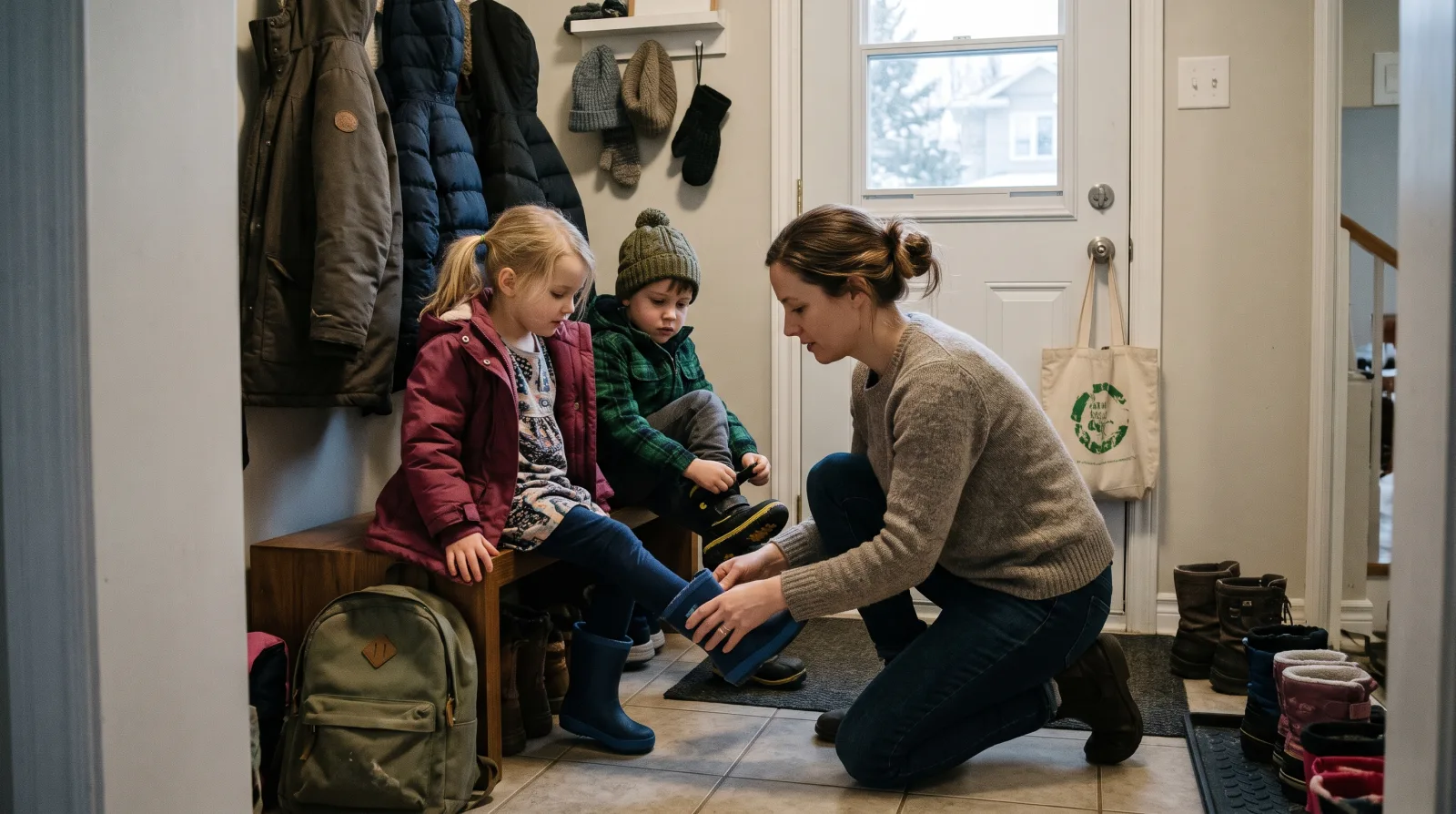
Around the 20th of each month a deposit marked "Canada CCB" lands in the accounts of most families with children under 18. It is not the same from one year to the next, and the reason is usually arithmetic rather than policy: the Canada Revenue Agency rebuilds the figure every July from the household's income on last year's tax returns. Knowing the handful of numbers in that calculation makes the July notice far less of a surprise.
Who can receive it
The CRA's conditions are that you live with a child under 18, that you are primarily responsible for the child's care and upbringing, and that you are a resident of Canada for tax purposes. You or your partner must also have Canadian citizenship, permanent residence, protected person status, qualifying temporary residence or registration under the Indian Act. Where two parents live with the child, the CRA presumes the female parent is primarily responsible; the other parent can apply instead with a signed letter from her.
The benefit is tax-free. The one ongoing obligation is that you and your partner each file a tax return every year, even with no income, because otherwise the CRA has nothing to calculate from. The filing deadline is 30 April, and the CRA warns that a late return can stop payments temporarily.
The maximum amounts for July 2026 to June 2027
For the current benefit year the maximum is $8,157 a year ($679.75 a month) for each child under 6 and $6,883 a year ($573.58 a month) for each child aged 6 to 17. The previous year, July 2025 to June 2026, the figures were $7,997 and $6,748; the amounts are indexed to inflation each July, 2 % this time. A child moves to the lower figure the month after their sixth birthday, one reason a payment can shrink outside July.
How income reduces it
The CRA uses adjusted family net income: both partners' net income from line 23600, less any Universal Child Care Benefit or registered disability savings plan income received, plus any such amounts repaid. Up to $38,237 the family receives the maximum. Between $38,237 and $82,847 the maximum is reduced by a percentage of the income above $38,237. Above $82,847 a fixed amount is deducted plus a smaller percentage of the income above that second line. The percentages depend on how many children the family has.
| Children | Income $38,237 to $82,847 | Income above $82,847 |
|---|---|---|
| One | 7 % of income over $38,237 | $3,123 plus 3.2 % of income over $82,847 |
| Two | 13.5 % of income over $38,237 | $6,022 plus 5.7 % of income over $82,847 |
| Three | 19 % of income over $38,237 | $8,476 plus 8 % of income over $82,847 |
| Four or more | 23 % of income over $38,237 | $10,260 plus 9.5 % of income over $82,847 |
Source: CRA, "How we calculate your CCB", payments based on 2025 adjusted family net income. The fixed amounts in the right-hand column are simply the full reduction accumulated across the middle band.
A worked illustration
Take a family with children aged 4 and 9 and a 2025 adjusted family net income of $60,000. The starting point is $8,157 plus $6,883, which is $15,040. Their income is $21,763 over the first threshold, and with two children the reduction rate is 13.5 %, so $2,938.01 comes off. The annual benefit is $12,101.99, paid as roughly $1,008.50 a month from July 2026 to June 2027.
Suppose the same family's income had instead been $100,000. The fixed reduction for two children is $6,022, plus 5.7 % of the $17,153 above $82,847, which is $977.72. The total reduction is $6,999.72, leaving $8,040.28 for the year, or about $670 a month. Because the rate above $82,847 is only 5.7 %, each extra $1,000 earned costs this family $57 of benefit. The CRA's child and family benefits calculator does the same arithmetic for your own figures.
A $1,000 rise in family income above $82,847 costs a two-child family $57 of benefit, not $1,000.
Why July matters, and what happens when income rises
Payments from July to June are based on the returns for the calendar year that ended six months earlier. The January to June 2026 payments used 2024 income; the July 2026 to June 2027 payments use 2025 income. A raise, a return to work or a second income in 2026 therefore has no effect until July 2027, and a drop in income in 2026 shows up at the same point.
Some events do change the figure mid-year. The CRA recalculates after a reassessment of either return, when your marital status changes, when a child enters or leaves your care, and when a custody arrangement starts or stops being shared. Entitlement for a child who leaves your care ends the month after they leave, and the CRA expects to be told about a move, since payments can stop if its mail is returned.
Payment dates and small amounts
For 2026 the CRA lists 20 January, 20 February, 20 March, 20 April, 20 May, 19 June, 20 July, 20 August, 18 September, 20 October, 20 November and 11 December. If the whole year's entitlement works out at less than $240, there is no monthly payment; the CRA pays it as one lump sum with the July payment. If a payment has not arrived, check your CRA account and details first, then wait 5 business days after the expected date before calling.
Shared custody and the Child Disability Benefit
Where a child lives with each parent between about 40 % and 60 % of the time, the CRA treats custody as shared and pays each parent half of what they would receive with full custody, each calculated on that parent's own adjusted family net income. It does not split in other proportions.
Families with a child approved for the disability tax credit receive the Child Disability Benefit on top: up to $3,480 a year ($290 a month) per eligible child for July 2026 to June 2027. It is reduced only once adjusted family net income passes $82,847, by 3.2 % of the excess for one eligible child or 5.7 % for two or more. No separate application is needed if you already receive the CCB for that child, only Form T2201, certified by a medical practitioner and approved by the CRA.
Good to know
The income used is net income after RRSP deductions and similar amounts, not gross pay. An RRSP contribution deducted for 2025 lowers the figure the CRA uses for July 2026 to June 2027.
Who this matters for, and what to check
- Every household with a child under 18, including those with income well above $82,847, since the benefit tapers rather than cuts off.
- Parents who separated or began living with a new partner: the CRA needs to know in the month it happens, and recalculates from the following month.
- Any partner who has not yet filed a 2025 return: without it, the CRA cannot calculate the July 2026 to June 2027 amount and payments may stop.
- Parents of a child who may qualify for the disability tax credit: once Form T2201 is approved, the CDB is paid for the current and two previous benefit years.
The takeaway
The CCB is a formula, not a discretionary payment. Count the children by age band, add up the maximums, take adjusted family net income from both 2025 returns, and apply the reduction rate for the number of children; the result, divided by twelve, is the deposit around the 20th. Nothing about 2026 income reaches the payment until July 2027, and nothing is paid unless both parents file. The same income figure drives the quarterly Canada Groceries and Essentials Benefit, so one filed return does the work for both.
Official sources
- CRA, Canada child benefit: how we calculate your CCB: maximum amounts, thresholds and reduction rates for July 2026 to June 2027, shared custody rule, CRA examples
- CRA, Canada child benefit: before you apply: eligibility conditions and the 40 % to 60 % shared custody definition
- CRA, Canada child benefit: payment dates: 2026 dates, $240 lump-sum rule, 5 business days
- CRA, Canada child benefit: after you apply: both partners must file every year; July recalculation; changes to report
- CRA, Child disability benefit: $3,480 maximum and reduction rates for July 2026 to June 2027
General information
This article is sponsored information from Delta Management OÜ, the publisher of Gobasco (company details). Gobasco is a private, independent website. It is not a government website and is not affiliated with the Government of Canada, the Canada Revenue Agency, Service Canada or any provincial or territorial government. It is general information, not personal tax, legal or financial advice, and it does not recommend any product or provider.
Figures are the official published amounts for the period stated or clearly labelled illustrations; what any one person receives or pays depends on their own circumstances and on the official assessment. This site processes no applications and charges no fees. Never give your Social Insurance Number, CRA My Account credentials, bank login or one-time passcodes to a website in response to an article. For your own position, use the official services of the agency concerned on canada.ca or your provincial government’s website.
 The Wednesday Brief
Don’t miss a change
One email each Wednesday with what has changed in Canada’s benefits, tax, savings and household costs, and the official source for each figure. Nothing to buy.
We first send a confirmation email. Free, and you can unsubscribe at any time.
Gobasco Editorial
Our editorial desk explains Canada’s household-money rules from the published sources of the agencies concerned. We do not name individual writers, we do not sell financial products and we take no applications. Corrections: editorial@gobasco.com.



 Savings & banking